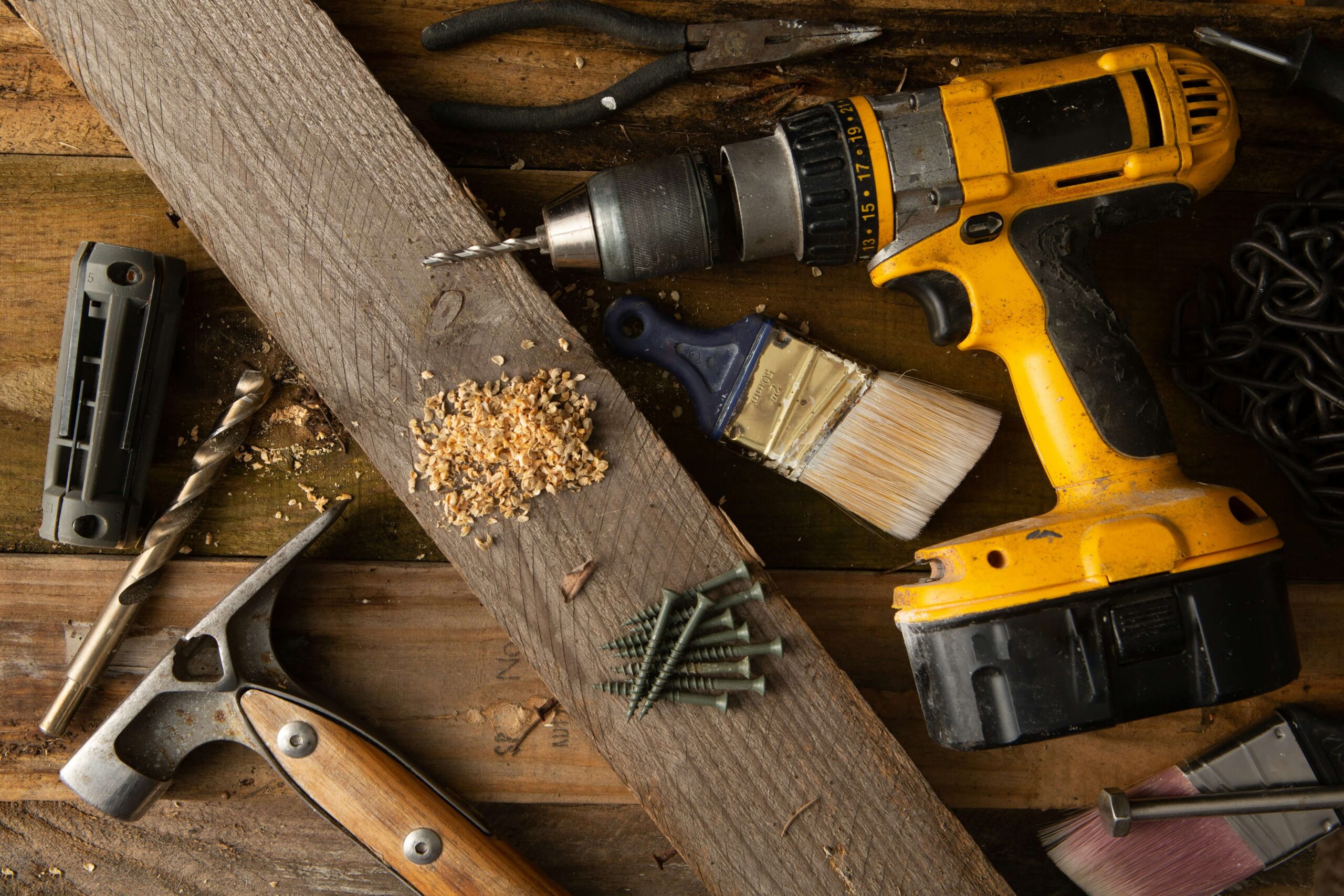
Choosing the best cordless drill for beginners shouldn’t require a degree in engineering. Yet walk into any hardware store — or scroll Amazon for ten minutes — and you’ll find dozens of models with confusing specs, mysterious voltage numbers, and conflicting reviews from “experts” who all conveniently link to the same affiliate products.
This guide cuts through the noise. We’ve researched seven cordless drills that consistently rank well for beginners and homeowners — people who need a reliable tool for hanging shelves, assembling furniture, installing curtain rods, and tackling weekend repair projects. Not contractors framing houses. Not woodworkers building cabinets all day. Real homeowners doing real home tasks.
For a deeper look at what real buyers complain about after purchasing, read our analysis of 1,247 Amazon reviews of cordless drills — the patterns are more consistent than you’d expect.
By the end of this article, you’ll know exactly which drill fits your needs, your budget, and your skill level — without spending another hour reading marketing copy.
What’s in This Guide
- What Beginners Actually Need in a Cordless Drill
- The 7 Best Cordless Drill for Beginners in 2026: Our Top Picks
- Quick Comparison Table
- How to Decide: Match the Drill to Your Use Case
- What You Don’t Need (Yet)
- Additional Reading
- Frequently Asked Questions
- Final Verdict
Quick Pick: If you want to stop reading right now and just buy something, the DeWalt DCD800 is the safest all-around choice for most beginners in 2026. It hits the sweet spot of power, weight, battery life, and ecosystem support. Keep reading if you want to understand why — or find something better suited to your specific situation.
What Beginners Actually Need in a Cordless Drill
Before we get to the models, let’s clarify what matters when you’re starting out. Most “best drill” lists overcomplicate this. Independent testing organizations like Consumer Reports and Pro Tool Reviews have spent years comparing drills under controlled conditions, and their findings have informed parts of this guide. Here’s what actually matters:
Voltage: 12V vs 18V/20V
You’ll see drills labeled 12V, 18V, or 20V Max. Higher voltage generally means more power — but also more weight.
- 12V drills are lightweight (2 to 3 pounds), compact, and perfect for furniture assembly, hanging pictures, and light household tasks. They can struggle with hardwood or larger bits.
- 18V / 20V Max drills (these are essentially the same — 20V Max is just marketing terminology for the same 18V battery measured under no load) handle almost any homeowner task and most light-duty professional work. They’re heavier (3 to 5 pounds) but far more versatile.
For most beginners, an 18V/20V drill is the better long-term investment. You’ll grow into its capabilities rather than out of them.
Brushless vs Brushed Motors
Brushless motors are more efficient, last longer, run cooler, and squeeze more work out of each battery charge. They cost a bit more upfront — but for any drill you plan to keep for years, brushless is worth the premium.
That said, a quality brushed drill from a reputable brand is perfectly fine for occasional household use. Don’t overthink it.
Battery Ecosystem
This is the one thing most beginners overlook — and it costs them money later.
When you buy your first cordless drill, you’re not just buying a drill. You’re choosing a battery platform. Whatever battery system you pick is what your future tools will need to be compatible with: impact driver, circular saw, sander, leaf blower, the works.
Ryobi, DeWalt, Milwaukee, and Makita each have their own battery systems. Once you commit, switching is expensive. Pick a platform with the tools you might want in the next 3–5 years. For a deeper dive into the differences between the major cordless tool platforms, read our complete comparison: DeWalt vs Milwaukee vs Makita: Which Tool Brand Should You Choose in 2026?
Chuck Size
The “chuck” is where the bit goes. Two sizes matter:
- 3/8-inch chuck: Lighter, smaller, fine for most beginner tasks.
- 1/2-inch chuck: Accepts larger bits, drives bigger fasteners, more versatile.
If you’re picking just one drill that needs to do everything, go with 1/2-inch.
Weight
This matters more than beginners realize. A heavy drill is fine for ten minutes. But install curtain rods across a whole house, or hang twenty pictures, and you’ll feel every ounce. Anything under 4 pounds is comfortable for extended use.
The 7 Best Cordless Drill for Beginners in 2026: Our Top Picks
We compared seven drills across the categories most beginners actually care about: power, weight, battery life, price, and how forgiving they are to use. Here’s the lineup.
1. DeWalt DCD800 — Best Overall for Beginners
Best for: Most homeowners who want one drill that does almost everything well.
The DeWalt DCD800 is a 20V Max brushless drill that has become the default recommendation in nearly every major review outlet in the last two years.
Why beginners love it:
- Brushless motor delivers strong torque without draining the battery quickly
- Compact size (under 4 pounds) makes overhead work much less tiring
- 15+1 clutch settings give you precise control — important when you’re still learning how much torque is “enough”
- Part of the DeWalt 20V Max platform, the biggest ecosystem of compatible tools in North America (over 200+ tools share the same battery)
- LED work light brightens up dark corners and inside cabinets
Across review platforms, the DCD800 consistently shows one of the highest ratios of 4-star and 5-star reviews to 1-star reviews among beginner drills — the most reliable signal of real-world satisfaction.
Limitations:
- More expensive than budget alternatives
- The 1/2-inch chuck adds slight weight versus 3/8-inch competitors
Typical price range: Mid-tier. Look for it as part of a starter kit that includes the battery, charger, and case — that’s almost always better value than buying the bare tool.
👉 Check current price on Amazon
2. Ryobi One+ HP Brushless — Best Value for Money
Best for: Beginners who want quality without paying premium prices, especially if they plan to expand their tool collection over time.
Ryobi is often dismissed by professionals — unfairly. For homeowners and weekend DIYers, the Ryobi One+ HP Brushless line offers genuinely impressive performance at roughly half the price of equivalent DeWalt or Milwaukee tools.
The “killer feature” of Ryobi is its battery platform: every Ryobi One+ tool made since 1996 uses the same battery system. That’s nearly three decades of backward compatibility. If you’re building a tool collection slowly, this is enormous.
Why beginners love it:
- Outstanding price-to-performance ratio
- Largest backward-compatible battery ecosystem in the industry
- Brushless version handles drilling and driving better than older Ryobi tools
- Bright green color makes it easy to find in a cluttered garage (yes, this matters)
Limitations:
- Heavier and bulkier than DeWalt and Makita equivalents
- Build quality, while solid, doesn’t quite match premium brands
- Resale value is lower if you ever upgrade
Typical price range: Budget to mid-tier. Often available as combo kits with impact drivers, batteries, and accessories for less than a single bare-tool DeWalt.
👉 Check current price on Amazon
3. Makita XFD13 / FD07 — Best for Comfort and Precision
Best for: Beginners who plan to do a lot of detail work, furniture assembly, or extended sessions, and prioritize a comfortable grip.
Makita drills consistently win praise for one thing: how they feel in your hand. Japanese engineering shows in the grip ergonomics, balance, and the smooth way the trigger ramps up speed.
The XFD13 (18V) is the workhorse for general use. The FD07 (12V) is one of the lightest professional-grade drills you can buy — about 2 pounds — making it ideal for overhead work or tight spaces.
Why beginners love it:
- Best-in-class ergonomics — least fatiguing drill in the lineup
- Excellent variable-speed trigger control for precise driving
- Highly reliable, with one of the lower failure rates in long-term ownership surveys
- Makita’s 18V LXT platform is huge, second only to DeWalt in North America
Limitations:
- Less commonly stocked in big-box retailers than DeWalt
- Battery and accessory selection at local stores can be more limited
- Premium pricing similar to DeWalt
Typical price range: Mid-tier to premium.
👉 Check current price on Amazon
4. Bosch PS31 — Best Compact 12V Option
Best for: Apartment dwellers, beginners with very light needs, or anyone wanting a “drawer drill” for occasional small jobs.
The Bosch PS31 is a 12V Max drill that has been a quiet favorite among reviewers for years. At just over 2 pounds, it’s small enough to fit comfortably in a kitchen drawer or a small toolbox — yet it has more than enough power for 90% of typical household tasks.
Why beginners love it:
- Genuinely tiny and lightweight
- Excellent for assembling IKEA furniture, hanging pictures, and installing hardware
- Two-speed transmission gives surprising versatility for its size
- Bosch’s reputation for build quality is well-earned
Limitations:
- Limited power for heavy-duty tasks like long screws into hardwood
- Bosch 12V battery ecosystem is smaller than competing brands
- 3/8-inch chuck restricts bit sizes
Typical price range: Budget to mid-tier as a kit.
👉 Check current price on Amazon
5. Black+Decker LDX120C — Best Ultra-Budget Option
Best for: Renters, occasional users, or anyone who needs a drill right now for one specific project and doesn’t want to spend more than the cost of dinner.
Let’s be honest about the Black+Decker LDX120C: it’s not going to win any performance awards. Independent testing has shown it struggles with demanding tasks, runs hot under load, and has a relatively short battery life. The 11-position clutch is reasonable, but the build is plasticky.
That said: for true light-duty use — hanging picture frames, tightening loose screws, assembling flat-pack furniture once or twice a year — it does the job at a price that’s hard to argue with.
Why beginners might pick it:
- The cheapest reputable option in the lineup
- Includes battery, charger, and a usable case
- Black+Decker’s lineup is widely available in the U.S.
- Lightweight at under 3 pounds
Limitations:
- Underperforms in tougher materials like hardwood or steel
- Battery life is shorter than premium options
- Plastic build doesn’t inspire confidence for heavy use
- Limited platform ecosystem if you want to expand
Reading through negative reviews, the most common complaint isn’t performance on day one — it’s battery degradation at the 12–18 month mark, which tracks with the pattern we documented in our Amazon review analysis.
Typical price range: Budget. Often available as a basic kit for less than the cost of a single premium battery.
👉 Check current price on Amazon
6. Skil PWRCore 12 — Best Underrated Pick
Best for: Beginners who want premium features at a mid-range price and don’t care about brand prestige.
Skil’s relaunch under the PWRCore platform in recent years has produced some genuinely impressive tools. The PWRCore 12 line includes a brushless drill that competes head-to-head with much pricier 12V offerings from DeWalt and Bosch.
Most homeowners overlook Skil because it doesn’t carry the brand cachet of DeWalt or Milwaukee. That’s an opportunity for budget-conscious buyers.
Why beginners love it:
- Brushless motor at a non-brushless price
- Surprisingly good ergonomics and build quality
- Comes with the proprietary PWRJump charger that fast-charges in minutes
- Significantly cheaper than Bosch or DeWalt 12V kits
Limitations:
- Smaller battery ecosystem than major brands
- Resale value is low
- Less common in big-box stores; mostly available online
Typical price range: Budget to mid-tier.
7. Craftsman V20 — Best for Brand Loyalty
Best for: Beginners who already own some Craftsman tools, or those who prefer shopping at Lowe’s.
Craftsman, now owned by Stanley Black & Decker (the same company that owns DeWalt), has rebuilt its cordless tool line into a credible mid-range offering. The V20 platform is widely available at Lowe’s and offers solid value for homeowners.
Why beginners love it:
- Reliable performance for general household tasks
- Easy availability at Lowe’s nationwide
- Competitive pricing compared to DeWalt with similar build quality
- Comfortable grip and decent battery life
Limitations:
- Battery platform is smaller than DeWalt or Ryobi
- Doesn’t quite match DeWalt’s top-tier performance under heavy load
- Resale value lower than premium brands
Typical price range: Mid-tier.
Quick Comparison Table
| Model | Voltage | Weight | Motor | Best For | Price Tier |
|---|---|---|---|---|---|
| DeWalt DCD800 | 20V Max | ~3.4 lbs | Brushless | Best overall, biggest ecosystem | $$$ |
| Ryobi One+ HP | 18V | ~3.5 lbs | Brushless | Best value, growing collection | $$ |
| Makita XFD13/FD07 | 18V / 12V | ~2-3.6 lbs | Brushless | Ergonomics & precision | $$$ |
| Bosch PS31 | 12V Max | ~2.1 lbs | Brushed | Compact, light tasks | $$ |
| Black+Decker LDX120C | 20V Max | ~2.9 lbs | Brushed | Ultra-budget, occasional use | $ |
| Skil PWRCore 12 | 12V | ~2.4 lbs | Brushless | Underrated, value brushless | $$ |
| Craftsman V20 | 20V Max | ~3.3 lbs | Brushless | Lowe’s shoppers, reliability | $$ |
Note: Prices change constantly. The “Price Tier” column reflects relative pricing among these models. Always verify current price and availability with the retailer before purchase.
How to Decide: Match the Drill to Your Use Case
Here’s a simple decision framework:
- You’ll use it once or twice a year for assembling furniture or hanging things → Black+Decker LDX120C or Bosch PS31
- You want one drill that handles 95% of household projects → DeWalt DCD800 or Makita XFD13
- You plan to build a tool collection over years and want the cheapest path → Ryobi One+ HP
- You want premium feel without the premium brand markup → Skil PWRCore 12
- You shop primarily at Lowe’s → Craftsman V20
- You prioritize lightweight comfort above raw power → Makita FD07 or Bosch PS31
What You Don’t Need (Yet)
To save money, skip these features on your first drill — you can always upgrade later:
- Hammer drill function — Only needed if you’re drilling into concrete or masonry regularly. Most beginners don’t.
- Multiple high-amp batteries — A single 2.0 Ah battery is enough for most household tasks. Larger batteries add weight and cost.
- Bluetooth/smart tool features — Marketing gimmicks for homeowner-grade use.
- Brushless absolutely required — Brushless is better, but a quality brushed drill from a major brand still works fine.
Before buying any drill, it’s worth understanding the full cost picture. Our 5-year total cost of ownership breakdown shows why cheap drills almost always cost more in the long run.
Additional Reading
If you want to dive deeper into cordless drill testing methodology and head-to-head professional comparisons, these resources are worth bookmarking:
- Consumer Reports — Best Cordless Drills — Lab-tested rankings with detailed methodology.
- Pro Tool Reviews — Head-to-Head Drill Comparisons — Real-world testing from working contractors.
- DeWalt Official Battery Compatibility Guide — Useful if you’re evaluating the DeWalt 20V Max ecosystem.
Frequently Asked Questions
What’s the difference between a drill and an impact driver?
A drill has a clutch and is designed for drilling holes and driving small to medium screws with precision. An impact driver uses concussive rotational force to drive long, large screws with minimal effort — but lacks the precision a drill offers for delicate work. Beginners should start with a drill. Add an impact driver later when you’re building decks, frames, or installing long fasteners.
How long do cordless drill batteries last?
A modern lithium-ion drill battery typically lasts 3 to 5 years of regular use, or 500–1,000 charge cycles. Store batteries at room temperature (not in freezing garages or hot attics), avoid completely draining them, and don’t leave them on the charger indefinitely. These habits can double battery lifespan.
Is it worth buying a drill kit or just the bare tool?
For your first drill, always buy the kit. The kit includes the battery, charger, and usually a case — buying these separately costs more than the kit itself in most cases. Only buy bare tools later, when you already own batteries that fit your platform.
Can I use a cordless drill on metal and concrete?
Metal: Yes, with the correct drill bit (titanium-coated or cobalt for harder metals) and slow speed. Most cordless drills handle thin metal easily.
Concrete: You need a hammer drill specifically — a regular cordless drill will struggle and may damage itself trying to drill concrete. For occasional concrete work, a corded hammer drill or a rotary hammer rental is more practical than buying a premium cordless hammer drill.
What size drill do I need for general home use?
For 90% of homeowners, an 18V / 20V Max drill with a 1/2-inch chuck is the right answer. It has the power and versatility for almost any task you’ll encounter without being overkill.
Are higher-voltage drills always better?
No. Higher voltage means more power, but also more weight, larger size, and a heftier price. For light-duty homeowner tasks, a 12V drill is often more comfortable and equally capable. Match the tool to the task, not to the spec sheet.
Final Verdict
For most beginners reading this in 2026, the DeWalt DCD800 is the best all-around choice. It balances power, weight, battery life, ecosystem support, and resale value better than any single competitor. If price is your primary concern and you plan to add more tools over time, the Ryobi One+ HP Brushless is the smarter long-term investment.
The truth is: any of the seven drills on this list will serve a beginner well. The differences between them matter mostly at the margins. What matters more is that you buy one and start using it. The best drill is the one that’s in your hand when you need to fix something — not the one you’re still researching three weeks from now.
The pattern across thousands of verified purchase reviews is consistent: buyers who spent an extra $40–$60 on a mid-range drill report far fewer complaints at the 18-month mark than those who went with the cheapest option. The drill itself rarely fails — the battery and chuck are where cheap builds fall apart first.
Whichever you choose, charge the battery fully before first use, start with simple projects, and build from there.
Have a question about choosing your first drill? Email us at contact@fixyardly.com — we read and respond to every message.
This article contains affiliate links. As an Amazon Associate, Fixyardly earns from qualifying purchases. See our Affiliate Disclosure for details.

Angel Gabriel Pucheta is the founder of Fixyardly, where he writes about home improvement, tool reviews, and practical DIY techniques. He started Fixyardly to cut through the noise of generic top-10 lists and provide homeowners with clear, honest, no-fluff guidance. Reach him at contact@fixyardly.com.