10 Essential Tools Every Homeowner Should Own: The Complete Beginner’s Toolkit Guide 2026
The first time something breaks in your home, you face a choice: call a contractor, or fix it yourself. The first option averages $80–$200 per service call for minor jobs. The second option requires having the right essential tools every homeowner should own — and knowing which ones actually matter.
Here’s the practical reality: most homeowners can handle around 90% of common repairs with just 10 carefully chosen tools. Build that toolkit smartly and you’re looking at roughly $150–$250 in upfront cost — not the $500–$1,000 that pre-made “starter kits” try to sell you.
This guide breaks down exactly which tools to buy first, which specific models tool reviewers consistently rank at the top, and — just as important — which gimmicky equipment you should skip entirely.
What’s in This Guide
- Why a Smart Toolkit Matters
- The 10 Essential Tools at a Glance
- Hand Tools (Items 1–6)
- Power Tools (Items 7–8)
- Measuring & Safety (Items 9–10)
- What You DON’T Need (Yet)
- How to Organize Your Toolkit
- Frequently Asked Questions
Quick Pick: Moving into your first home this weekend? Buy these five tomorrow: a claw hammer, a 6-piece screwdriver set, a 25-foot tape measure, a cordless drill, and a utility knife. That covers roughly 70% of immediate situations. Build out the rest over the next two months as projects come up.
Why a Smart Toolkit Matters
Without basic tools, every small problem becomes a service call: $80 to tighten a loose hinge, $150 to patch a small drywall hole, $200 to install a curtain rod. Spread across one year of typical homeownership, that’s around $1,500 spent on jobs you could have handled in 20 minutes with a $25 toolkit.
There’s a deeper pattern reading through years of homeowner forums and Reddit threads in r/HomeImprovement and r/DIY: the people who built a basic toolkit in their first six months consistently report fewer deferred repairs and lower annual maintenance spending than those who kept calling contractors. The U.S. Department of Housing and Urban Development (HUD) data on routine maintenance backs this up — early repairs prevent the cascading damage that turns $20 problems into $2,000 problems.
The principle of a good first toolkit: buy quality, buy basic, skip the gimmicks. One solid claw hammer used for 20 years costs less than three cheap ones replaced over the same period.
The 10 Essential Tools at a Glance
Before we go deep on each one, here’s the full toolkit in one view:
| # | Tool | Recommended Model | Price Range | Use Case |
|---|---|---|---|---|
| 1 | Claw Hammer | Estwing E3-16C | $ | Nails, frames, demolition |
| 2 | Screwdriver Set | Klein Tools 6-Pc Cushion-Grip | $ | Furniture, appliances, hinges |
| 3 | Tape Measure | Stanley FatMax 25-ft | $ | Any measurement task |
| 4 | Utility Knife | Stanley 10-099 Retractable | $ | Boxes, drywall, weatherstripping |
| 5 | Adjustable Wrench | Crescent AC28VS 8-inch | $ | Plumbing nuts, bolts |
| 6 | Pliers | Channellock 526 Combination | $ | Gripping, twisting, holding |
| 7 | Cordless Drill | DeWalt DCD800 or Ryobi One+ HP | $$ | Drilling, driving, mixing |
| 8 | Drill Bit Set | DeWalt DW2587 21-Piece | $ | Companion to the drill |
| 9 | Torpedo Level | Stanley FatMax 9-inch | $ | Frames, shelves, installations |
| 10 | Safety Gear | 3M SecureFit + Mechanix Original | $ | Eye/hand protection |
We’re not listing exact prices because Amazon Associates rules prohibit it (prices change daily), but the $ symbols give you a rough sense: $ = under $25, $$ = $25–$80, $$$ = $80+.
Hand Tools (Items 1–6)
1. Claw Hammer (16 oz)
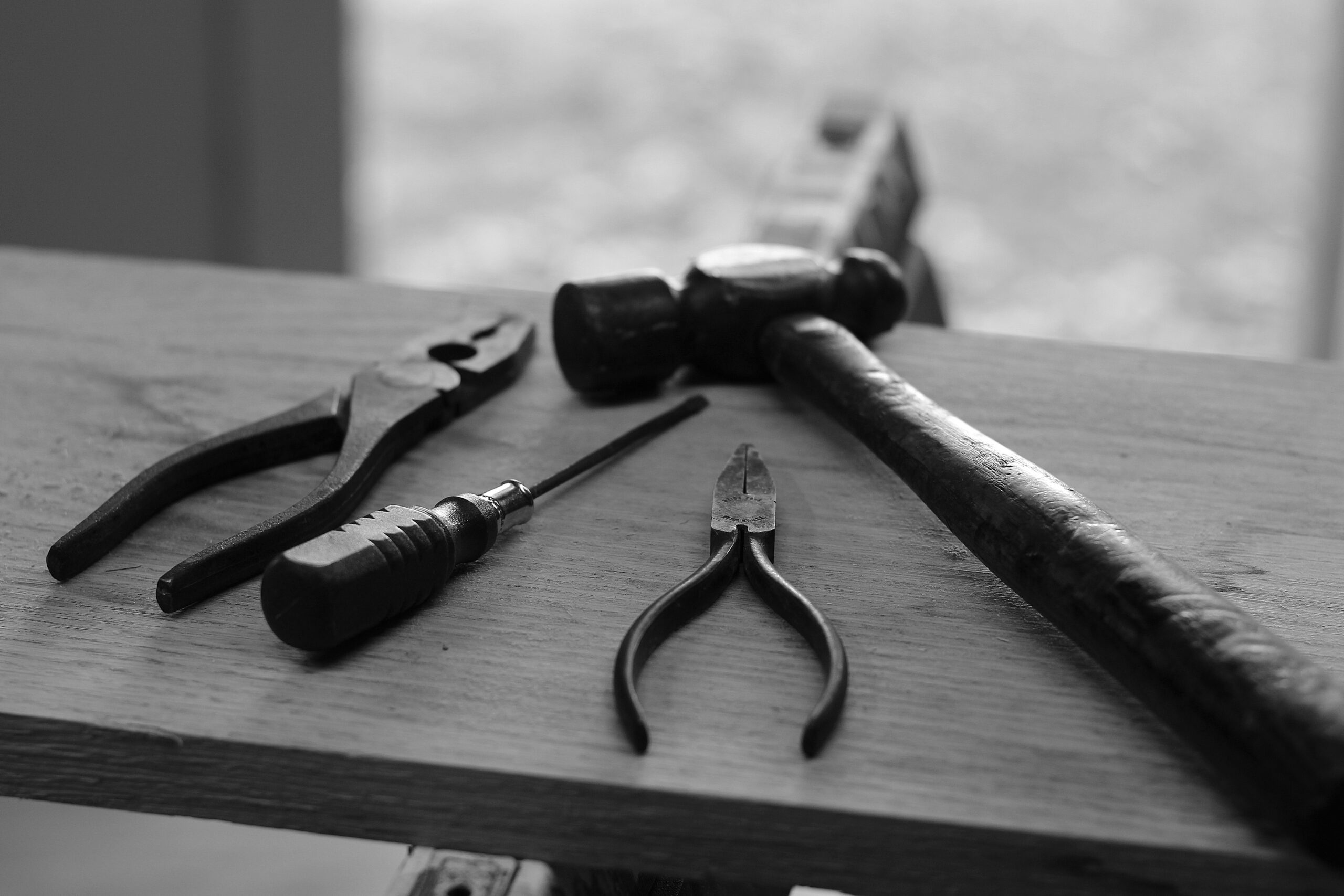
The single most universal tool in any home. A claw hammer drives nails with the flat head and pulls them with the curved back. You’ll use it for hanging frames, assembling furniture, basic carpentry, and dozens of small tasks.
What to look for:
- 16 oz weight — the consensus sweet spot for general home use. Lighter hammers struggle with bigger nails; heavier ones cause arm fatigue.
- Rubber or padded grip — prevents slipping when your hands are sweaty
- Steel head — avoid cheap pot-metal hammers that bend or chip
- Rip claw or curved claw — both work; rip claws are slightly more versatile
Recommended model: The Estwing E3-16C is the model that shows up in the top three of almost every tool reviewer’s “best hammers under $30” list — Family Handyman, Popular Mechanics, Pro Tool Reviews — and has thousands of positive Amazon reviews. The one-piece forged steel construction is the reason: cheaper hammers have heads that loosen from the handle over years of use, and Estwing eliminates that failure point entirely.
Avoid: Oversized framing hammers (22 oz+). They’re built for contractors driving nails all day — overkill and uncomfortable for homeowner use.
👉 Check current price on Amazon
2. Screwdriver Set (6-Piece Multi-Bit or Individual)
You’ll use screwdrivers more than any other hand tool. Every appliance, every piece of furniture, every cabinet hinge eventually needs one.
What to look for:
- Multiple sizes — at minimum, 2 Phillips heads (#1 and #2) and 2 flat heads (small and medium)
- Magnetic tips — life-changing for working in tight spaces and not dropping screws inside walls
- Ratcheting handle (optional) — speeds up repetitive screwing
- Hardened steel tips — cheap screwdrivers strip out after a few uses
Recommended model: The Klein Tools 6-piece set. Klein is the brand most electricians actually use professionally, and that’s not marketing — the cushion grips and hardened tips outlast Stanley and Husky equivalents in long-term use. Reading through Amazon reviews, the most consistent praise is “still works after 5 years of daily use,” which is the highest compliment you can give a screwdriver set.
Avoid: “All-in-one” screwdrivers with 50 interchangeable bits. The bits are usually low-quality and the storage is annoying. A simple 6-piece set with fixed shafts works better.
👉 Check current price on Amazon
3. Tape Measure (25-Foot)
Precision is the foundation of every home project. Without accurate measurements, nothing fits, and materials get wasted.
What to look for:
- 25-foot length — covers any room, hallway, or piece of furniture
- Locking blade — holds your measurement in place while you mark
- Standout (how far the tape extends before bending) — at least 6 feet for one-person measuring
- Both metric and imperial — useful when reading product specs
Recommended model: The Stanley FatMax 25-foot has been the benchmark for over 15 years for one reason: an 11-foot standout. That means you can extend the blade 11 feet horizontally before it bends — letting you measure a room solo, hooking the tab onto a corner and walking the tape across. Most competitors max out at 7–8 feet. This is the kind of specification that matters in practice and rarely shows up in spec comparisons.
Avoid: Tape measures shorter than 25 feet (too short for most rooms) and digital tape measures (more expensive, batteries die, less reliable than traditional). Looking through hundreds of reviews of digital tape measures on Amazon, the recurring complaint is laser inaccuracy in bright rooms — exactly when you need it most.
👉 Check current price on Amazon
4. Utility Knife (Retractable)
A sharp utility knife handles dozens of tasks: opening boxes, scoring drywall, cutting carpet, trimming weatherstripping, slicing through tape.
What to look for:
- Retractable blade — safer for storage and transport
- Easy blade replacement — fixed blades dull quickly, swap them often
- Comfortable grip — you’ll use this more than you expect
Recommended model: The Stanley 10-099 Classic Retractable is one of the most-purchased utility knives on Amazon for a reason — simple metal construction, decades-proven design, and replacement blades cost almost nothing. There are fancier options with quick-change mechanisms (Milwaukee Fastback, for example), but for a first utility knife, simple wins.
Pro tip: Always replace dull blades. A dull utility knife is more dangerous than a sharp one because it requires extra force, which leads to slips. Most ER cuts from utility knives happen with dull blades, not sharp ones.
👉 Check current price on Amazon
5. Adjustable Wrench (8-Inch)
For plumbing nuts, hardware bolts, and dozens of other adjustments. An 8-inch adjustable wrench covers the size range most homeowners encounter.
What to look for:
- Smooth jaw operation — cheap wrenches jam or slip
- Calibrated jaw markings — helpful for repeat measurements
- Chrome or polished steel — resists rust
Recommended model: The Crescent 8-inch adjustable wrench comes from the brand that literally invented the adjustable wrench category in 1907. The reason most pros still use Crescent: the worm gear stays tight over years of use. Reading through reviews of cheaper alternatives, the most common failure mode is the jaw slipping under load — a problem the Crescent design solved a century ago.
Avoid: Buying a full wrench set as your first wrench. You don’t need 12 fixed sizes; one good adjustable wrench handles around 90% of homeowner tasks.
👉 Check current price on Amazon
6. Pliers (Combination or Slip-Joint)
For gripping, twisting, holding small objects, and pulling things. A basic combination pliers handles the majority of household tasks. As you grow your toolkit, you’ll add needle-nose pliers and tongue-and-groove pliers (channel locks) for specific jobs.
What to look for:
- Comfortable grip — you’ll squeeze hard sometimes
- Hardened jaws with serrations — for solid grip
- Spring-loaded handles (optional) — opens automatically after each squeeze
Recommended model: The Channellock 526 6.5-inch combination pliers. Made in Meadville, Pennsylvania since 1886, and the reason “channel locks” became a generic term is that this company made them right. The serrations grip without rounding off bolts — the most common failure of budget pliers.
👉 Check current price on Amazon
Power Tools (Items 7–8)
7. Cordless Drill/Driver
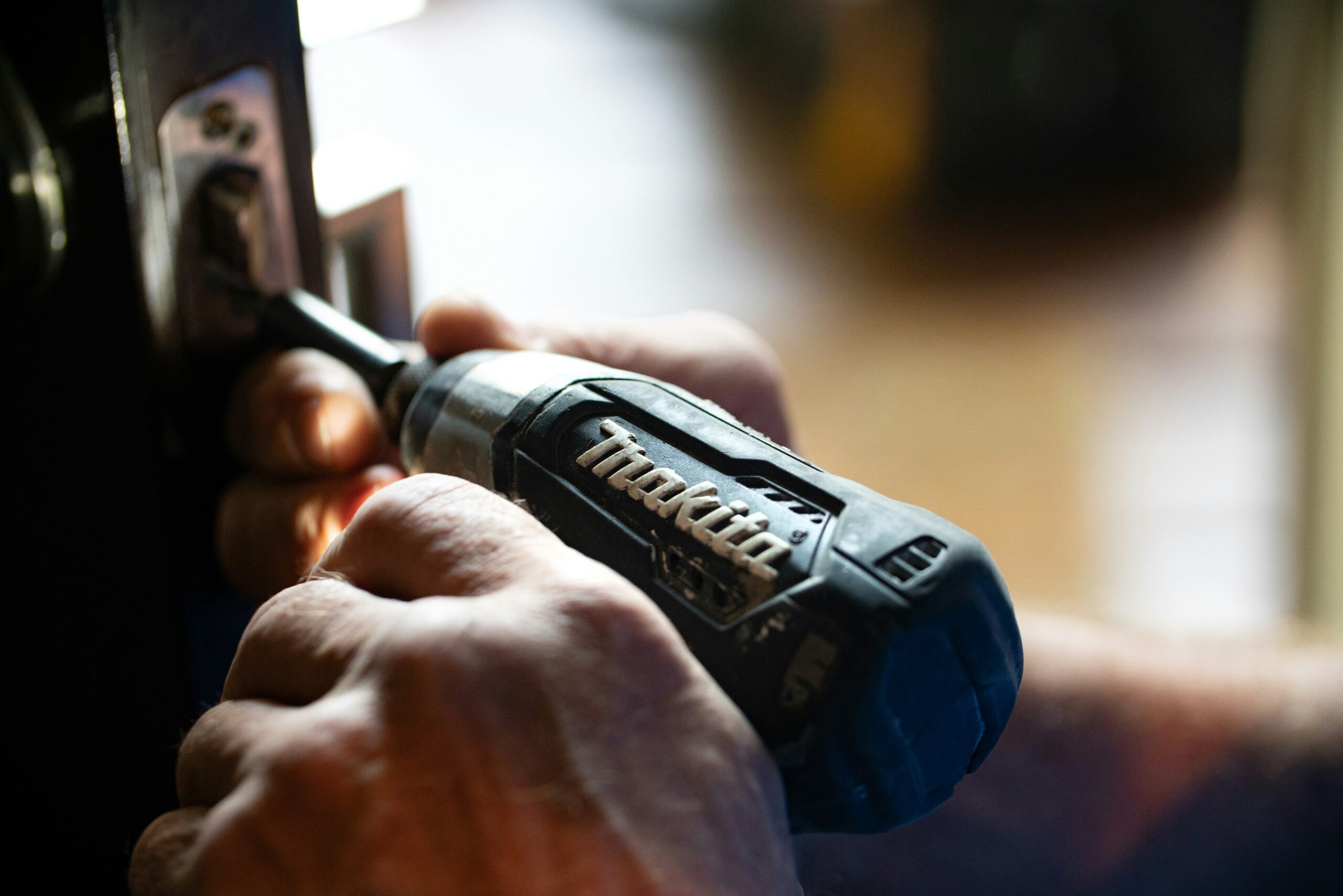
If you only buy one power tool, make it this one. A cordless drill handles drilling holes, driving screws, mixing paint, installing curtain rods, assembling furniture, hanging shelves, and dozens of other tasks.
What to look for:
- 18V or 20V Max — adequate power for any homeowner task
- Brushless motor (preferable) — more efficient, longer battery life, runs cooler
- 1/2-inch chuck — accepts larger bits than 3/8-inch chucks
- Two batteries included in kit — one charging, one in use
Recommended models:
- Budget pick: Ryobi One+ HP Brushless — the ecosystem you can grow into without changing battery platforms.
- Mid-range pick: DeWalt DCD800 — the cordless drill that shows up in more “best for homeowners” lists than any other model, per Pro Tool Reviews and Popular Mechanics 2024–2025 roundups.
For our complete breakdown of which cordless drill to choose based on budget and use case, read our Best Cordless Drill for Beginners 2026 guide covering 7 top models in detail.
Avoid: Corded drills (less flexible), low-voltage drills (8V or less — underpowered for many tasks), and ultra-budget brands you’ve never heard of (battery quality is critical, and off-brand batteries are the #1 complaint in Amazon reviews of $40–$60 cordless drills).
8. Drill Bit Set
A cordless drill is useless without bits. Buy a quality combination set rather than collecting bits piecemeal.
What to look for:
- Combo set with twist bits + driver bits — covers drilling and screwing
- Range from 1/16″ to 1/2″ for twist bits — covers most household drilling
- Titanium or cobalt coating for harder materials (metal, hardwood)
- Phillips, flathead, hex, and Torx driver bits
- Storage case — bits scattered in a drawer disappear instantly
Recommended model: The DeWalt DW2587 21-piece Drill/Drive Set. Covers the full range a homeowner needs without the bloat of 100-piece sets where 80 bits sit unused forever. The case is the underrated part — it survives garage drops, and bits stay where you put them.
👉 Check current price on Amazon
Measuring and Safety (Items 9–10)
9. Level (9-Inch Torpedo)
Picture frames, shelves, curtain rods, cabinet installations — all need to be level. A 9-inch torpedo level fits in a toolbox, covers most household tasks, and is more practical than oversized 4-foot levels for typical homeowner work.
What to look for:
- Multiple vials — horizontal, vertical, and 45-degree
- Magnetic base — sticks to metal surfaces (pipes, brackets) for hands-free work
- Easy-to-read bubble — fluorescent vials are easier in low light
- Sturdy construction — cheap levels lose calibration quickly
Recommended model: The Stanley FatMax 9-inch Torpedo Level. The magnetic base is genuinely useful — it sticks to electrical boxes, conduit, and bracket hardware so you can mark with both hands free. Reading through reviews, the cheaper alternatives (Empire, Johnson) consistently lose calibration within a year. Stanley’s holds up.
Upgrade pick: Laser levels are excellent for hanging multiple frames or long shelves, but a basic torpedo level is sufficient for starting out.
👉 Check current price on Amazon
10. Safety Gear (Glasses + Work Gloves)
The least exciting items on this list — and the most important. According to the U.S. Consumer Product Safety Commission, drilling and grinding cause around 20,000 emergency room visits per year from eye injuries alone, and cuts from utility knives or sharp metal add tens of thousands more. Both are almost entirely preventable.
What to buy:
- Safety glasses: 3M SecureFit Protective Eyewear — ANSI Z87.1 rated for impact resistance, wrap-around for side protection.
- Work gloves: Mechanix Wear Original — synthetic leather palm with breathable backing. Best balance of dexterity and protection for the price.
- Optional but useful: dust mask for sanding or drywall work, foam earplugs for extended power tool use
👉 Get the 3M SecureFit safety glasses on Amazon 👉 Get the Mechanix Wear gloves on Amazon
Reality check: Most DIY injuries happen during quick 5-minute jobs where the user skipped protection “just this once.” The pattern in ER reports is remarkably consistent: it’s never the big project where someone gets hurt — it’s the 30-second job that “didn’t need” safety gear.
What You DON’T Need (Yet)
Save money by skipping these tools until you have a specific project that requires them:
- Circular saw — only needed for cutting lumber, plywood, or large materials. Rent or buy when you start a deck or large building project.
- Miter saw — niche for trim work. Don’t buy until you’re installing molding.
- Reciprocating saw (Sawzall) — for demolition. Useful but rare for homeowner needs.
- Pneumatic nail gun — overkill for most homeowner projects. A hammer works fine for years.
- Stud finder — useful, but the “knock test” works fine for most picture hanging. Buy when you need to mount heavy items (TVs, large mirrors).
- Tool chest with 200 compartments — start with a basic tool bag or toolbox. Upgrade when your collection actually grows.
- Branded electrician’s testing equipment — unless you’re doing electrical work, you don’t need it.
- Wet/dry shop vacuum — useful in a garage or workshop, but not essential for apartment/condo homeowners.
The pattern across DIY communities is consistent: buy tools as projects demand them, not preemptively. Every tool bought “just in case” is money tied up in equipment gathering dust.
How to Organize Your Toolkit
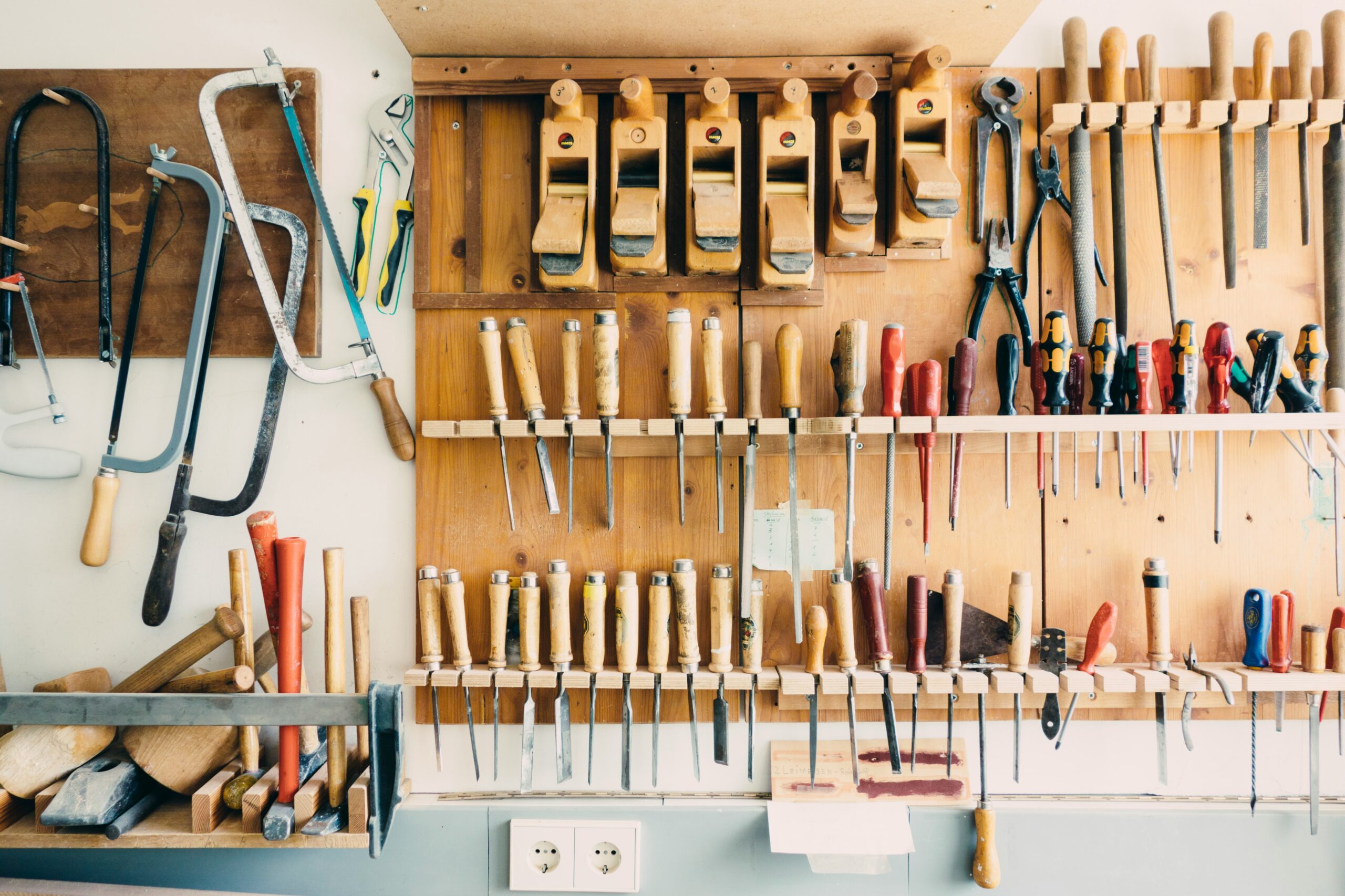
A toolkit is only useful when you can find what you need quickly. Here’s how to organize from day one:
For apartments or condos
- One soft-sided tool bag with multiple pockets, stored in a closet
- Small bin for consumables (screws, nails, picture hangers, anchors)
- Drill and bits in a separate hard case (protects the drill and keeps bits organized)
For houses with garage or basement
- Pegboard wall — keeps everything visible and accessible
- Tool chest with rolling base — for items you don’t use weekly
- Labeled bins for consumables and small parts
- Separate “weekend project” tote with frequently-used tools
Universal principles
- Label everything. You won’t remember what’s in the third drawer down.
- Keep used tools accessible. Don’t bury your most-used tools at the bottom of the toolbox.
- Restock as you use. If you finish using your spackle, write “buy spackle” on a list immediately.
For more on maintaining your home efficiently, our guides on drywall repair and choosing the right tool brand walk you through specific applications of these tools.
Frequently Asked Questions
How much should I spend on a beginner homeowner toolkit?
A quality beginner toolkit covering all 10 essential tools costs roughly $150–$250 if you buy mid-range brands. Cheap “homeowner starter kit” boxes from big-box stores ($30–$60) include tools that fail within a year — the bulk of negative reviews for these kits cite stripped screwdrivers and bent hammers within months of purchase. Spending a bit more upfront on quality items that last decades is the better financial decision.
Should I buy a pre-made toolkit or individual tools?
Individual tools, almost always. Pre-made kits include cheap versions of every tool. You’re better off buying one quality hammer than a 50-piece kit where each tool is mediocre. The exception: starter kits from reputable brands (Stanley, Husky, Craftsman) at hardware stores can be acceptable if you verify each tool feels solid in hand.
What’s the difference between a drill and an impact driver?
A drill has a clutch and is designed for drilling holes and driving small to medium screws with precision. An impact driver uses concussive rotational force to drive long, large screws with minimal effort but lacks the precision a drill offers for delicate work. Most homeowners only need a drill; add an impact driver later if you tackle deck building or large fasteners.
Should I buy battery-powered or corded tools?
For homeowner use, battery-powered is almost always better. Cordless tools let you work anywhere without finding outlets or extension cords. Modern lithium-ion batteries hold enough charge for typical home projects, and brands have invested heavily in cordless platforms over the past decade. Corded tools are still useful for heavy continuous work (large sanders, table saws), but those aren’t beginner tools.
How do I store tools to make them last?
- Keep tools dry — moisture causes rust on metal parts
- Wipe tools clean after use — especially after drywall work, sawdust, or paint exposure
- Sharpen blades regularly — dull blades are dangerous and inefficient
- Store batteries at room temperature — extreme heat or cold shortens battery life
- Don’t leave power tools in the garage during winter in cold climates — bring batteries inside
What’s a good starting brand for homeowner tools?
For hand tools: Stanley, Klein Tools, Craftsman, and Husky offer reliable mid-range quality. For power tools: DeWalt and Ryobi are the safest first-purchases for homeowners, based on consistent rankings across Pro Tool Reviews, Family Handyman, and Popular Mechanics. See our DeWalt vs Milwaukee vs Makita comparison for a deeper dive into power tool brand ecosystems.
When should I upgrade from a basic toolkit to a more advanced one?
Upgrade when your projects demand it, not on a schedule. If you’ve patched five drywall holes and now want to remodel a bathroom, that’s the time to invest in specialized tools. If you’ve owned your home for two years and still mostly hang pictures, your basic toolkit is fine. Money tied up in unused equipment is wasted money.
Final Thoughts
The pattern in Amazon reviews of “homeowner toolkit” products is remarkably consistent: the 1-star reviews are almost never from people who bought the wrong tool — they’re from people who bought too many tools too quickly and ended up with a drawer full of equipment they don’t know how to use.
The path that works: start with these 10, learn each one through actual use, and add specialized tools as your projects demand. Within a year of regular homeownership, the next tools to buy become obvious — and so do the ones the marketing convinced you that you needed but never did.
One last practical note. The hammer in this guide costs roughly the same as one service call to tighten a loose cabinet hinge. The full 10-tool list costs about what a contractor charges to patch a single drywall hole and repaint the wall. The math isn’t really debatable.
New to home improvement and not sure where to start? Email us at contact@fixyardly.com — we read every message and love helping beginners build confidence.
This article contains affiliate links. As an Amazon Associate, Fixyardly earns from qualifying purchases. See our Affiliate Disclosure for details.

Angel Gabriel Pucheta is the founder of Fixyardly, where he writes about home improvement, tool reviews, and practical DIY techniques. He started Fixyardly to cut through the noise of generic top-10 lists and provide homeowners with clear, honest, no-fluff guidance. Reach him at contact@fixyardly.com.